

Permanent holiday lighting
Lights that look like Christmas at night and like nothing at all in daylight.
A permanent system installed into color-matched track, with the wiring concealed and the spacing set to reproduce a traditional C9 roofline. Installed once, controlled from your phone, and built so it can be serviced.

And when it's off, there's nothing to see.
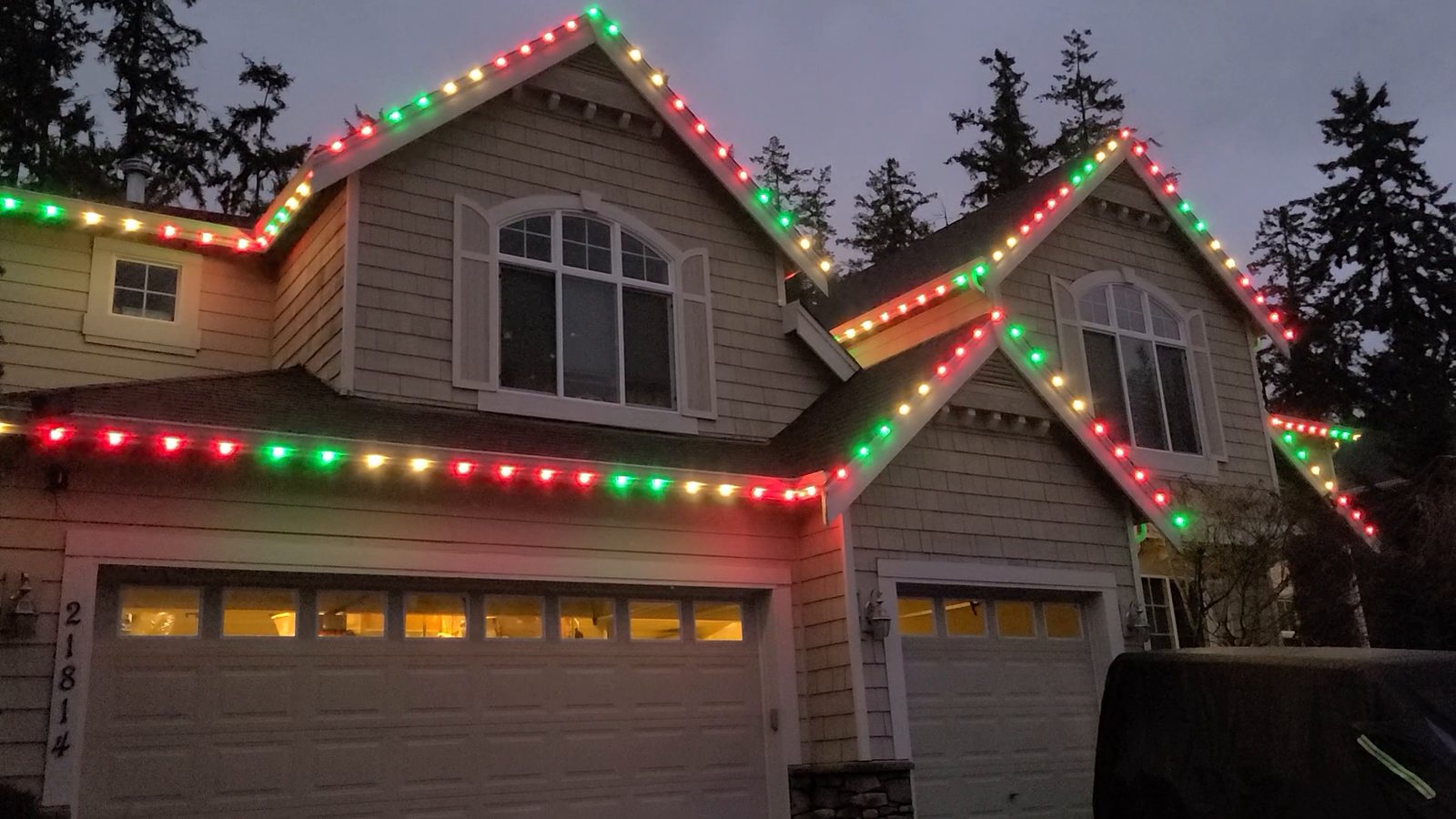
Same house, same camera position, eighteen seconds apart. Drag across.
 LitOff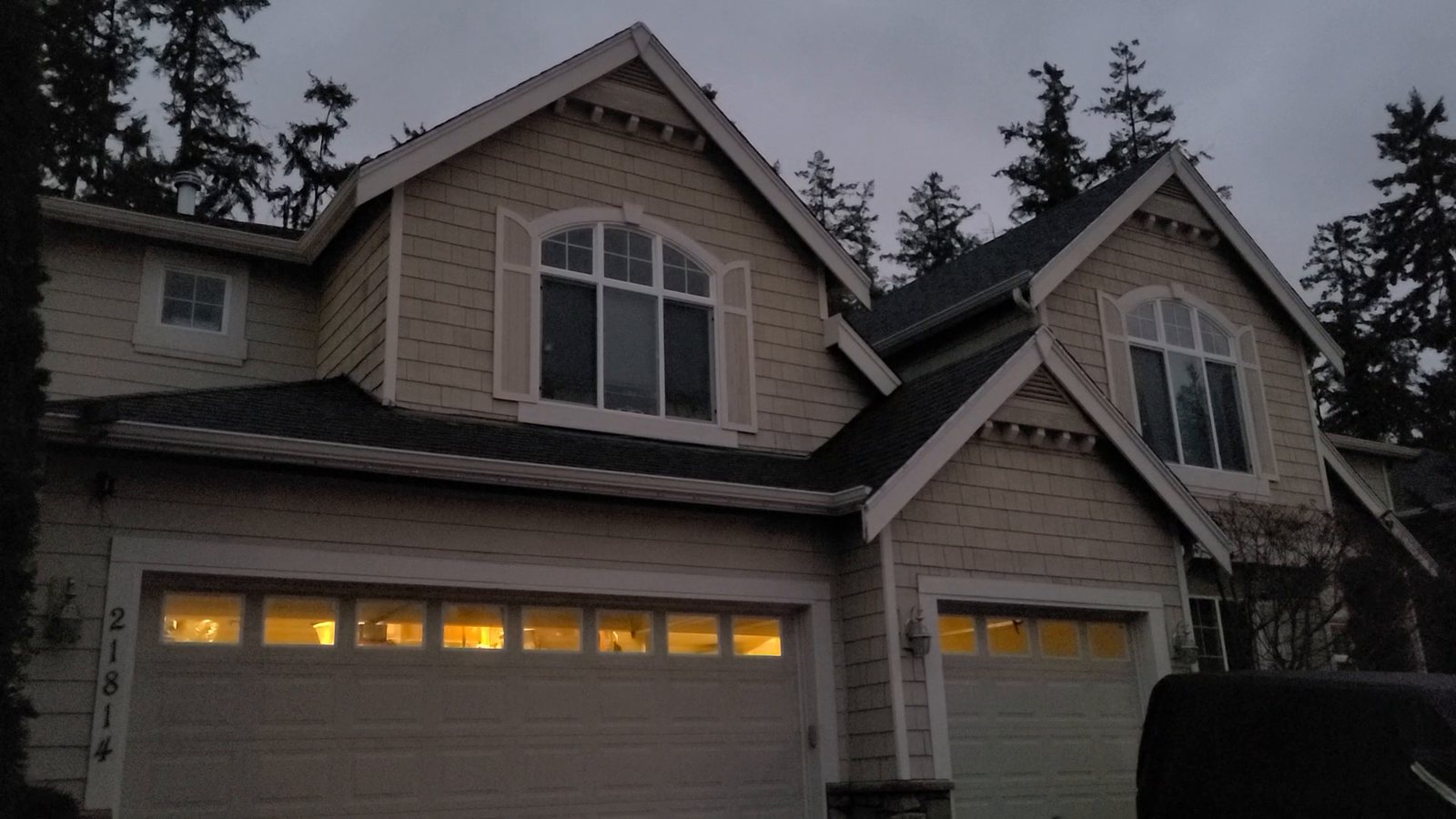
One installation. Every occasion you actually mark.
Changing the display is a setting, not another visit. Same house, same camera position — tap through.


Warm white — the classic C9 look
Colors and schedules are set from an app. There is no reinstallation between holidays, and nothing comes down in January.
The same roofline moving between settings. No ladder, no reinstallation — thirty seconds on a phone.
Permanent lighting can look excellent. It can also look terrible.
The difference is not the quality of the LEDs. It comes down to placement, spacing, symmetry, color temperature, how the track is installed, how the wire is managed, how transitions are handled, and knowing the architecture of the house well enough to decide where lights do not belong.
More lights do not make a better display. For many homes the front-facing roofline and gutter line are enough. Not every edge needs a light, not every peak needs animation, and not every holiday needs twelve colors moving at once. Good lighting design knows when to stop.
How the installation runs
The process is straightforward. The craftsmanship is in executing each part cleanly.
- 01
In-person quote and design
We walk the house. Roofline layout, which features should be lit, available 110V power, controller placement, access, transitions, track color. The design comes from the architecture, not from a predetermined kit.
- 02
Arrival and setup
We confirm the plan with you, stage ladders and equipment, and establish safe access before anything goes on the house.
- 03
Install the track
Track is fitted to the roofline and cut as required. This is where craftsmanship becomes visible: straight runs, deliberate corners, consistent positioning, no awkward starts and stops.
- 04
Install the control system
The control box takes standard household 110V power and drives the low-voltage system. We place it where it stays accessible for service, visually quiet, and within practical network range.
- 05
Install the light strands
Pebble strands go into the track. Different strand lengths let the layout fit your actual architecture, and spacer cables bridge sections that should stay dark.
- 06
Conceal the wiring
Covers install between the lights, hiding the wire inside the track. This step is most of the difference between a finished installation and a wire stapled under your roof.
- 07
Configure controls
We connect the controller, set up scheduling and brightness, and walk you through the app before we leave.
- 08
Final visual inspection
We check the work from the ground, looking for crooked track, inconsistent spacing, visible wire, and anything that reads wrong from normal viewing distance. An installation can work perfectly and still look bad.
A 3-year workmanship warranty
We warrant our labor and workmanship for three years. Manufacturer product warranties are separate and governed by the manufacturer's current written terms, which we will go over with you rather than paraphrase.
Questions homeowners ask
What do permanent Christmas lights look like during the day?
On a properly matched installation, you should have to look for them. Track comes in white, brown, black, gray and sand, and we can custom paint components to match your trim. The system spends more time off than on, so daytime appearance matters as much as the display does.
Can permanent lights actually look like real C9 Christmas lights?
That is the point of how we configure them. At roughly 12-inch spacing with a warm-white setting, the individual points of light reproduce the visual rhythm of a professionally installed C9 roofline, rather than the continuous wall-wash glow many permanent systems produce.
Are permanent lights allowed in HOA neighborhoods?
HOA requirements vary by association, and no lighting system is universally approved. What we have found is that brightness control and discreet installation matter: a system that dims, follows existing architectural lines, and becomes hard to notice when off is a very different proposition from conspicuous permanent hardware. Check your own HOA requirements, and we are happy to talk through the specifics of your project.
How does the cost compare to hiring an installer every year?
A permanent system is a larger upfront investment than one season of temporary lighting. In our experience it can approach the cost of roughly three to four seasons of professionally installed temporary lights, though that depends heavily on the house and the installations being compared. We would not present it as a guaranteed payback period. The real choice is whether you keep paying for installation and removal each year or invest once in a system that stays with the home.
What happens if a light fails?
The strands are modular. We remove the relevant track covers, access the component, replace the strand using the compatible connections, and reinstall the trim. The installation is built so it can be serviced rather than replaced.
Is it maintenance free?
No, and we would be careful of anyone who says otherwise. It dramatically reduces seasonal labor, but components can fail, track attachment is worth checking, and network or control changes happen. The advantage of a modular professional system is that maintenance is a service call rather than a re-installation.
Every house is different. That's why the quote is in person.
We look at your roofline, your power, your trim color, and what you actually want lit — then design around the house.
Book a free quote